

Search has fundamentally changed. Instead of comparing multiple websites, users now rely on Artificial Intelligence (AI) tools to deliver a single, trusted answer. This shift is redefining how businesses approach Search Engine Optimization (SEO), content strategy, and customer engagement.
In this article, you will learn what Generative Engine Optimization (GEO) means and how to build a marketing strategy that keeps your brand visible, credible, and competitive in an AI-driven search landscape.
How AI Is Changing Search Behavior in 2026
Search is no longer about scrolling through a list of links and deciding where to click. Today, users ask a question and receive a direct answer generated by AI. Platforms like ChatGPT and Google Gemini analyze multiple sources and deliver a single, summarized response that feels complete and authoritative.
This shift changes the role your website plays. Instead of being one of many options, your content now competes to become part of the answer itself.
Quick takeaways:
- Users are consuming answers instead of browsing websites
- Visibility now depends on being included in AI-generated responses
- Content must be structured for AI interpretation, not just human reading
What Is the Difference Between SEO and GEO
Most businesses understand SEO. GEO is newer and becoming even more important.
What is SEO?
-
Search Engine Optimization focuses on improving your visibility in traditional search engine results.
What is GEO?
-
Generative Engine Optimization focuses on getting your content used and cited by AI tools when they generate answers.
How they work together:
- SEO helps get your content discovered
- GEO helps your content get selected
To remain competitive, your strategy needs both.
Key AI Marketing Terms Explained Clearly
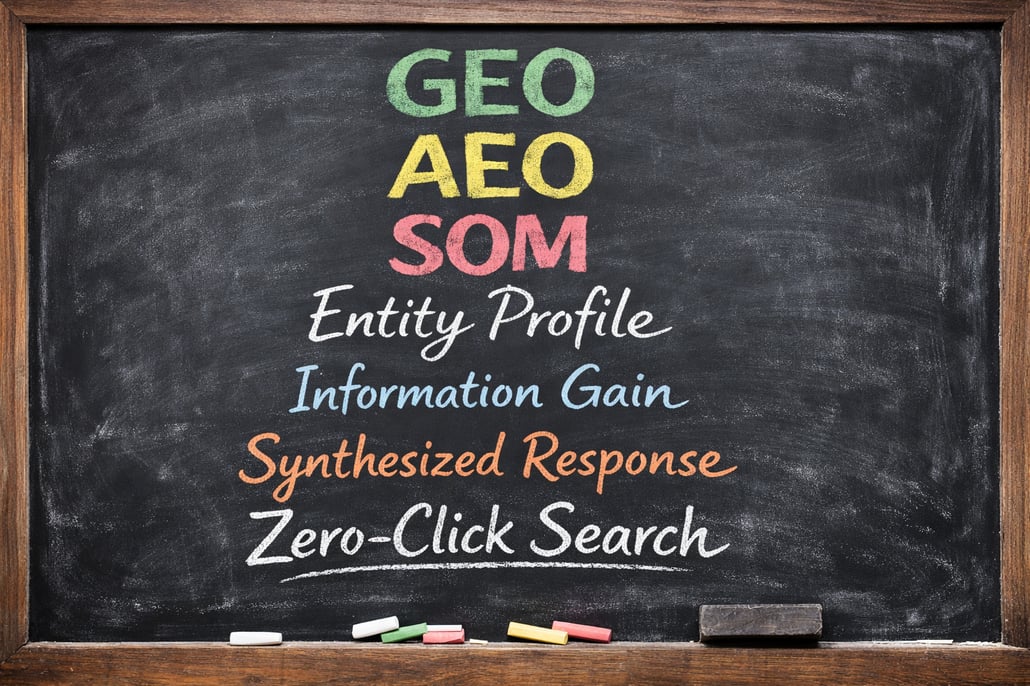
AI terminology can quickly become overwhelming. These are the concepts that matter most for your strategy.
Generative Engine Optimization:
-
Optimizing your content so AI tools can understand, trust, and reference it in responses.
Answer Engine Optimization (AEO):
-
Structuring content to directly answer specific questions in a clear, digestible way.
Share of Model (SOM):
-
How often your brand appears in AI-generated responses. This is the AI-era equivalent of SEO’s Share of Voice (SOV).
Entity Profile:
-
Your brand’s digital presence, built from mentions, reviews, and consistent information across the web.
Information Gain:
-
The unique value your content provides beyond what already exists online.
Synthesized Response:
-
An AI-generated answer that combines information from multiple sources into one clear explanation.
Zero-Click Search:
-
A search experience where users get their answers without clicking through to a website.
Quick takeaways:
- AI prioritizes clarity, credibility, and usefulness
- Consistency across your digital presence matters
- Original insights increase your likelihood of being referenced
How to Optimize Content for AI and GEO
Understanding the concepts is one thing. Applying them is what drives results.
Lead with the answer.
Start each section by clearly answering the question, then expand with supporting detail.
Write based on how people actually search.
Search queries are now conversational and problem-based. Your content should reflect how people naturally ask questions.
Structure content for readability and extraction.
AI tools favor content that is easy to scan and interpret.
Use:
- Clear headings
- Short paragraphs
- Bullet points
- Defined terms
Strengthen your credibility signals.
AI evaluates your authority based on more than your website.
Focus on practical, experience-based content.
AI can summarize existing information. It can’t replace real experience or nuanced insights.
At Xcellimark, this often means helping businesses create content that reflects how things work, how they're used, and how they benefit their customers, not simply describing them at a high level.
Quick takeaways:
- Clear structure improves visibility
- Real expertise builds trust
- Practical insights improve your chances of being cited
How Xcellimark Applies GEO in Real HubSpot Strategies
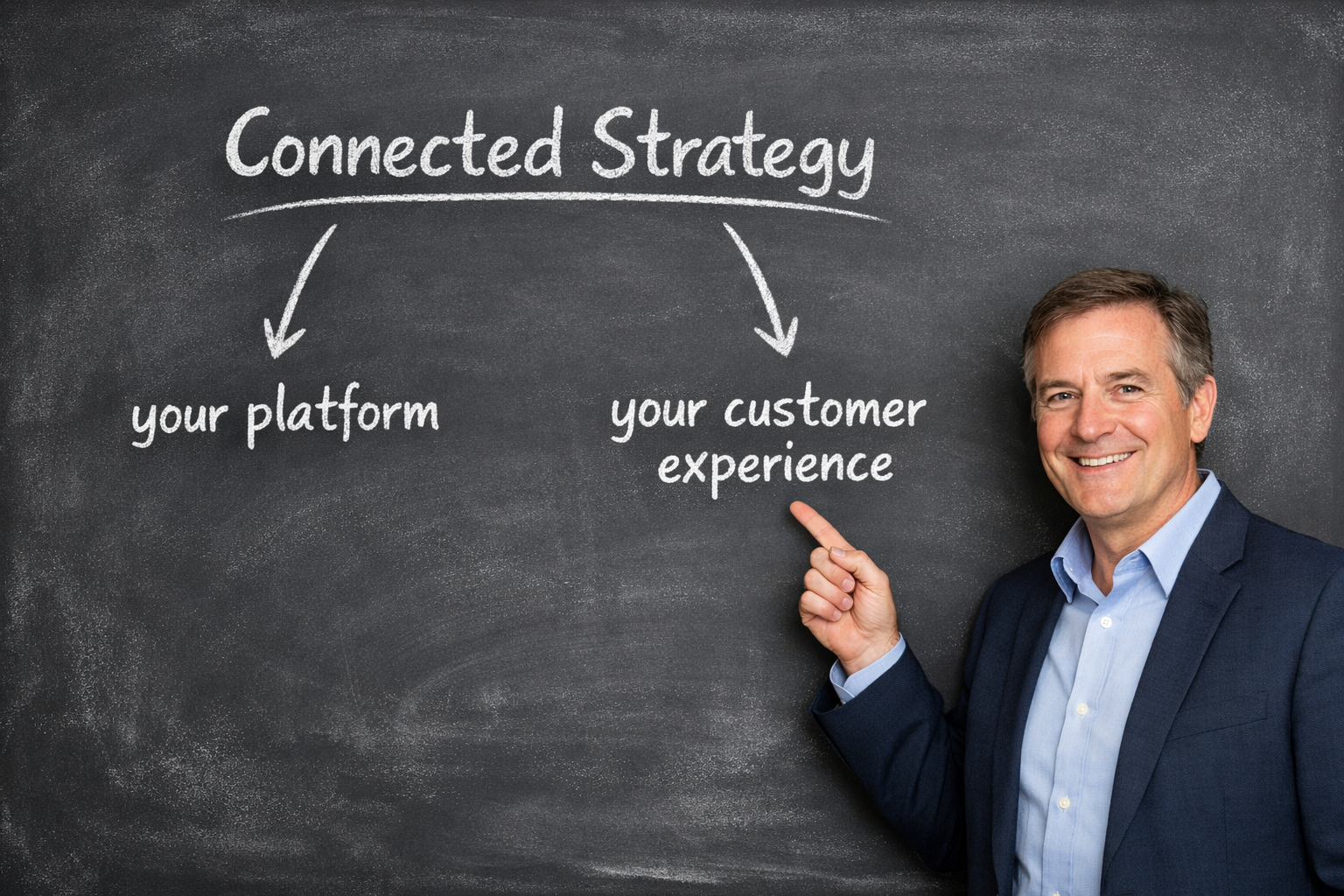
Understanding GEO conceptually is helpful. Seeing how it’s applied makes it actionable.
At Xcellimark, GEO isn’t treated as a separate tactic. It’s built into how we design and implement marketing and sales solutions.
Through our HubSpot onboarding and training services, our configurations align with real business processes to ensure both users and AI tools can interpret data effectively.
This includes:
- Structuring content for clarity and usability
- Aligning marketing and sales data
- Creating systems that support personalization and automation
The result is a more connected strategy where your content, your platform, and your customer experience all reinforce each other.
How to Use AI for Personalization Without Losing the Human Touch
AI makes it possible to personalize at scale, but scale without authenticity can hurt your engagement.
What is AI-powered personalization?
-
Using AI tools to tailor messaging based on behavior, preferences, data, and intent.
How to keep personalization human
- Start with human-written messaging – AI should enhance your voice, not replace it.
- Use real context – Reference actions and behaviors, not simply names.
- Avoid over-automation – Too many automated touchpoints can feel impersonal
- Maintain consistency – Your tone should feel like your brand at every stage.
When implemented correctly, these strategies become part of a larger sales enablement and marketing automation framework that supports meaningful engagement rather than operating for efficiency only.
Example of AI-ready content strategy
Instead of writing generic blogs, structure content to:
- Answer specific questions
- Include step-by-step processes
- Provide practical application
This increases both visibility and authority in AI-driven search
Quick takeaways:
- AI enables scale, but people build relationships
- Relevance matters more than volume
- Consistency builds trust over time
Ethical AI in Marketing for B2B Brands
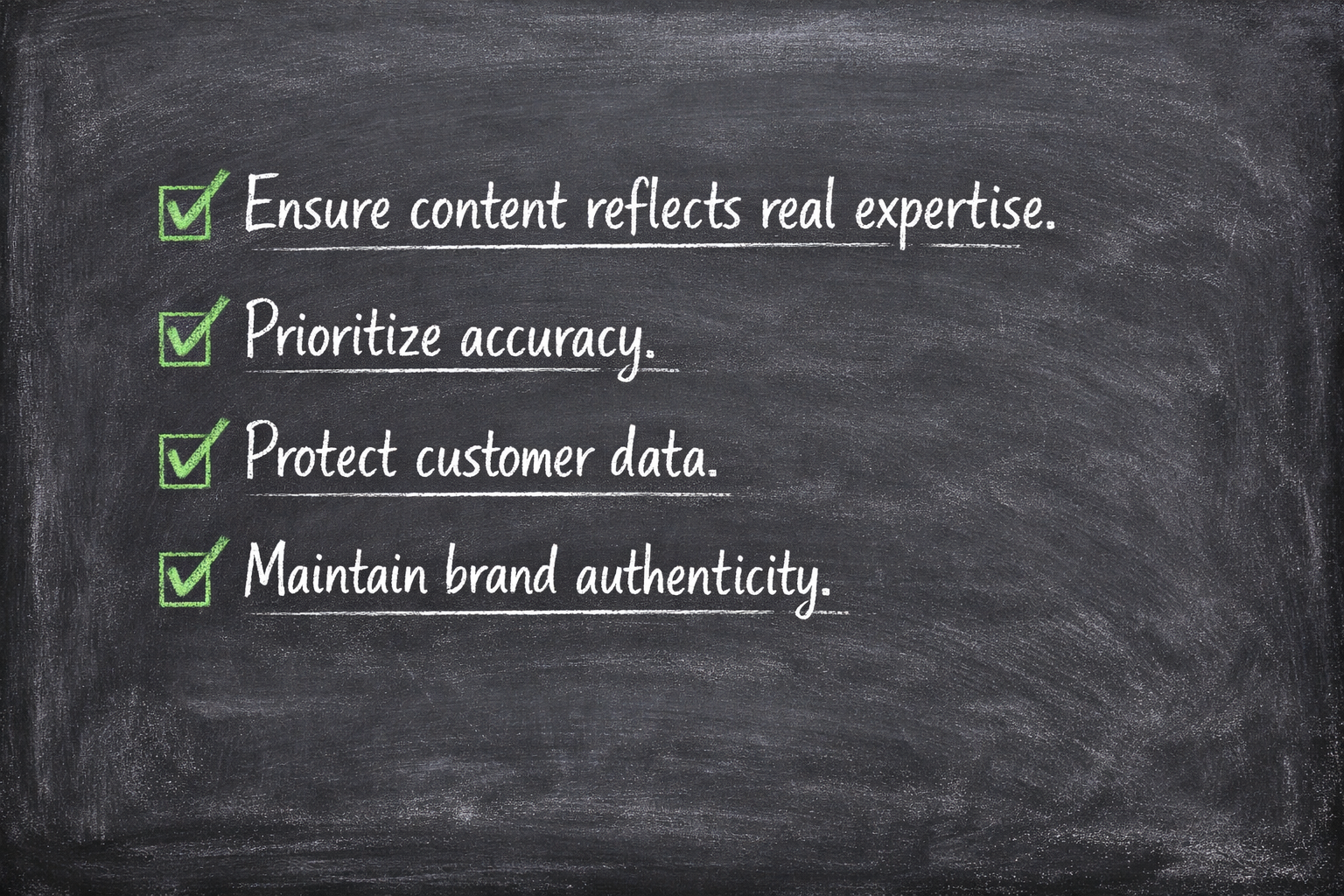
As AI becomes more integrated into marketing, ethical considerations become more important.
What is ethical AI in marketing?
- Using AI in a way that is accurate, transparent, and respectful of user data.
Practical guidelines
- Ensure content reflects real expertise – AI-generated content should always be reviewed and validated.
- Prioritize accuracy – Incorrect information can damage credibility quickly.
- Protect customer data – AI tools should never compromise sensitive information.
- Maintain brand authenticity – Your brand voice should remain consistent and genuine.
Quick takeaways:
- AI should support your strategy, not define it
- Trust is still the foundation of B2B marketing
- Transparency strengthens credibility
How to Measure Success in an AI Search Environment
Traditional metrics still matter, but they no longer tell the full story.
What to track
- AI mentions of your brand
- Share of Model
- Engagement quality from AI-driven traffic
These signals provide a clearer picture of your visibility in an AI-driven environment.
How Local and Interactive Experiences Influence AI Visibility
AI-driven search is not limited to written content. For businesses with multiple locations or service areas, visibility also depends on structure and accessibility of your information.
Interactive tools, such as our HubSpot Interactive Location Map module, help ensure your business is discoverable, accessible, and usable within AI-driven search environments.
Frequently Asked Questions About AI and Search
What is GEO in marketing?
- GEO is the process of optimizing content so AI tools include your brand in generated answers.
How is GEO different from SEO?
- SEO focuses on rankings. GEO focuses on being part of the answer.
What is AEO?
- AEO is structuring content to directly answer questions clearly and efficiently.
How does AI affect SEO?
- AI shifts the focus from rankings to relevance, clarity, and authority.
What is AI-powered personalization?
- Using AI to tailor messaging based on user behavior and engagement.
How can businesses stay competitive in AI search?
-
By creating structured, authoritative, and experience-driven content that AI can trust and use.
What This Means for Your Business
If your brand isn’t included in AI-generated answers, you’re missing a growing share of your market.
To stay competitive:
- Expand from SEO into GEO
- Structure content for answers, not just rankings
- Invest in original, experience-based insights
- Align your strategy with how AI interprets and delivers information
Ready to Adapt Your Strategy for AI-Driven Search?
AI is not replacing search. It’s redefining how visibility works.
At Xcellimark, we help businesses align their HubSpot platform, content strategy, and sales processes with how search actually functions in an AI-driven environment.
Whether you need HubSpot implementation, a refined marketing strategy, or a more structured approach to content, our team builds systems that support long-term growth.
Our goal is simple: Make sure your brand is not just found, but chosen.



.png?width=500&name=HUG%20Event%20Banner%20%20(15).png)